
Blog
Homemade diet or kibble? What science says

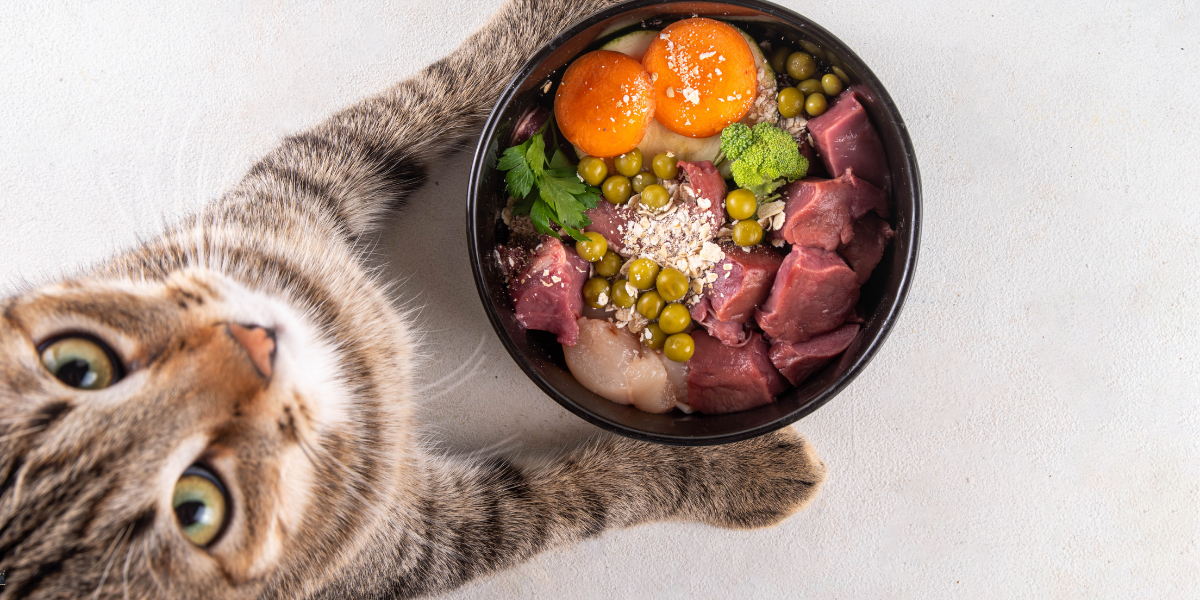
In the world of cat nutrition, there are two big myths:
- The devil: industrial kibble, criticized for heavy processing, the use of fillers like legumes and grains, and additives;
- Holy water: the homemade diet: fresh ingredients, no additives, and the certainty of knowing what your cat is eating.
But is a homemade diet really the best choice?
In recent years, surprising research has emerged on the choice between homemade diets and kibble—research you’re about to discover.
We’ll explore the pitfalls, the scientific evidence, what pet parents actually do in real life, and finally a more balanced option for those who don’t want to compromise between convenience and quality.
1) Homemade diets on the internet: the unsettling fact
If you search online for “homemade diet recipe for cats”, you’ll find hundreds—thousands—of recipes: combinations of meat, fish, vegetables, supplements, bones, and various add-ons.
But there’s one figure that should make you pause: a well-known study from the University of California, also published by the American Veterinary Medical Association, analyzed 200 homemade dog-diet recipes from books, websites, and assorted sources and found that almost none were “perfectly complete” (only one diet out of 200 was complete)!
Many recipes did not meet the recommended nutritional requirements; others showed deficiencies in essential macro- and micronutrients such as calcium, vitamins, and minerals.
This study, even though conducted on dogs, is a warning sign: if many dog recipes are inadequate, cat recipes—with much stricter nutritional needs—carry even greater risks.
From this comes a fundamental principle: the only reliable homemade diet is one formulated by a qualified veterinary nutritionist.
But even then, there’s a huge unknown: real-world execution. Because even a perfect diet “on paper” can become problematic if, in practice, it’s modified, simplified, adapted, or followed imprecisely.
2) Do pet parents follow the vet’s instructions correctly?
A group of researchers at Tufts University (Massachusetts, USA) asked a key question: Do pet parents really manage to follow veterinarian-prescribed homemade diets correctly?
The answer was alarming.
Only a little more than 1 in 10 people followed the diet exactly as prescribed
Everyone else? They made “by-eye” changes, swapped ingredients, skipped supplements, or adjusted portions.
What do these numbers tell us?
- There’s a systemic gap between the “ideal” prescribed diet and what’s actually followed.
- The changes people make—even if they seem minor (e.g., reducing an ingredient, omitting a supplement)—are not harmless: they alter the nutritional profile (macros, micros, nutrient ratios).
- The fact that only a small minority follows the recipe “to the letter” shows how hard it is to maintain a strict homemade diet day after day.
The authors conclude that, despite good intentions and appreciation for homemade diets, perfect adherence is rare. That’s why it’s crucial for owners to be aware of the limitations and for the nutritionist to provide ongoing monitoring.
3) Is kibble better than homemade food?
Kibble is the most common choice: it keeps for a long time, costs less, and is easy to portion.
But convenient doesn’t always mean healthy, especially for an animal like the cat, which is an obligate carnivore.
What science says
A study from the University of Cambridge showed that after just 5 weeks on a diet high in grains and legumes (typical of kibble), cats’ gut flora changes significantly.
And that’s no small detail. The gut microbiota is an invisible organ that regulates digestion, metabolism, immune defenses, and aging.
According to the World Journal of Gastroenterology, an imbalanced microbiota is linked to:
- Chronic intestinal diseases
- Obesity and diabetes
- Premature aging
- Reduced immunity
Why are legumes in almost all kibble?
1. To improve the label:
Legumes raise the “crude protein” value, but they don’t provide complete proteins for cats. The label looks “rich”, but there’s often not enough real meat. The result? Cats that are always hungry.
2. To save money:
Grains and legumes are inexpensive. Many brands use them to lower the final price, even though they don’t truly nourish.
In summary
Kibble is convenient, but it’s often full of unsuitable ingredients. Over time, an unbalanced diet can disrupt your cat’s gut equilibrium, promoting chronic disease and metabolic disorders.
Kibble is undoubtedly convenient, but it often contains grains and legumes that don’t respect the cat’s carnivorous nature. Recent studies show these choices can alter gut flora and, over time, compromise overall health.
4) Felinus air-dried food as an alternative to a homemade diet
We’ve seen that kibble manufacturers have to keep costs down and use legumes and grains in high amounts, compromising cats’ health in the long run.
We’ve also seen that the homemade diet is excellent in theory, but in practice it’s a tough challenge: it takes precision, time, consistency, expertise, and oversight. Many owners can’t sustain it over time.
For those who want the naturalness and quality of a homemade diet, but without the mistakes and effort of DIY, the most sensible option is to choose a packaged food that comes as close as possible to the ideal homemade standard.
This is where Felinus air-dried comes in. Here’s why:
- It contains a much higher amount of meat than kibble: a 1.2 kg bag of air-dried food contains 3 kg of fresh meat (the meat is dried, loses water, and therefore weight)
- No legumes or grains;
- The meat is air-dried at a temperature below 75°C, so it retains protein integrity and vitamins.
If, for example, Felinus is designed around these principles (meat as the primary ingredient, no unnecessary grains, “gentle” processing), it can be the best alternative to a homemade diet: a ready-to-serve, balanced, safe food that’s close to the ideal model you’d like to feed.
In conclusion, the ideal would always be a custom homemade diet formulated with a veterinary nutritionist—but if you don’t have the resources (time, expertise, consistency) to maintain it perfectly, choosing Felinus air-dried can be the best compromise for your emperor.