
Blog
Here’s how much it can really cost to save on your cat’s food

Curated by the Felinus Team of Nutrition Experts
Loving your cat means wanting a long, healthy, happy life for them. And in an ideal world, our purchasing choices should reflect that desire. Yet every day, millions of owners in Italy—with the best intentions—make a mistake that seems logical at first glance: they try to save money on food.
“One euro less per kilo, a 3-for-2 deal… after all, it’s just cat food, right?”
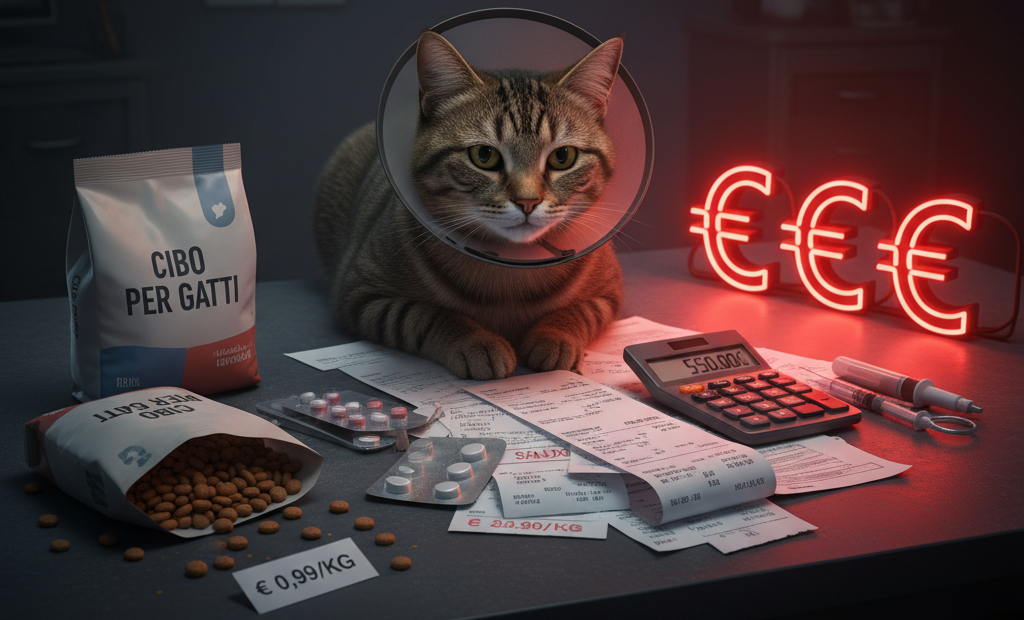
The answer—backed by decades of nutritional research and by the stories we see every day—is a resounding no. What looks like an immediate saving at the checkout often turns into a “hidden tax,” paid in health, wellbeing and—ironically—in veterinary bills that can far exceed the initial savings.
Let’s look at the facts.
The cat’s body: a strict carnivore
The first fundamental truth to start from is this: the cat is an obligate carnivore. Its entire biological system, from the digestive tract to metabolism, evolved for one purpose: processing animal-based proteins and fats.
Many commercial foods—especially the cheaper ones—ignore this reality. To cut costs, they replace valuable meat proteins with low-cost fillers such as corn, wheat, rice and other plant flours. While a cat may survive on these ingredients, its body can’t truly thrive. A diet chronically high in carbohydrates, for an animal not designed to process them, leads to a state of constant inflammation.
It’s like putting farm-grade fuel in a Ferrari. Sure, it might run—but long-term engine damage is guaranteed.
The process that destroys nutrients: extrusion
Another industry secret is the most common production method: extrusion. Kibble is made by cooking a dough of flours at extremely high temperatures and pressures (often above 120–150°C).
Scientific studies have shown that this harsh process can:
- Denature proteins, reducing their biological value and digestibility.
- Destroy essential, heat-sensitive vitamins such as Vitamins A, E, and the B group.
- Damage healthy fats like Omega-3s, essential for skin and coat.
The result is a sterile, nutritionally depleted product that then has to be “fortified” with added synthetic vitamins and flavor enhancers to make up for the losses and make it appealing.
From problem to real life: what does it really cost?
But what does all of this mean for you and your cat? It means that an inadequate diet is a leading cause of chronic issues that result in frequent—and expensive—vet visits.
According to pet insurance estimates, the average cost to diagnose and treat common diet-related conditions can be surprisingly high:
- Allergic dermatitis and chronic itching: visits, tests, and initial treatments can easily exceed €150–€250.
- Gastroenteritis and recurring digestive problems: between ultrasounds, lab work, and special diets, costs can range from €200 to over €500 in more complex cases.
That €20–€30 a month saved on food suddenly feels meaningless in the face of a single bill like that.
The solution: invest in superior nutrition
Real prevention—the real saving—lies in choosing a diet that respects your cat’s biology. Food built on the principles that science now recognizes as optimal:
- Animal Proteins First: Most of the recipe should be high-quality meat or fish.
- Low Carbohydrate Content: No corn, wheat, or other unnecessary fillers.
- Gentle Cooking Process: A method that preserves the natural integrity of nutrients.
By following these principles, we developed Felinus Air-Dried.
Instead of using flours and high temperatures, we start with 80% real, fresh Italian “Human Grade” meat and slowly air-dry it at a low temperature. This gentle process keeps nutrients, vitamins, and natural enzymes intact, creating a food that’s incredibly digestible and biologically appropriate.
It’s not just another kibble. It’s a nutritional choice that tackles at the root the problems caused by industrial formulas.
You’re not spending more. You’re investing to avoid spending much, much more in the future.