
Blog
Air-dried food for cats: the definitive guide

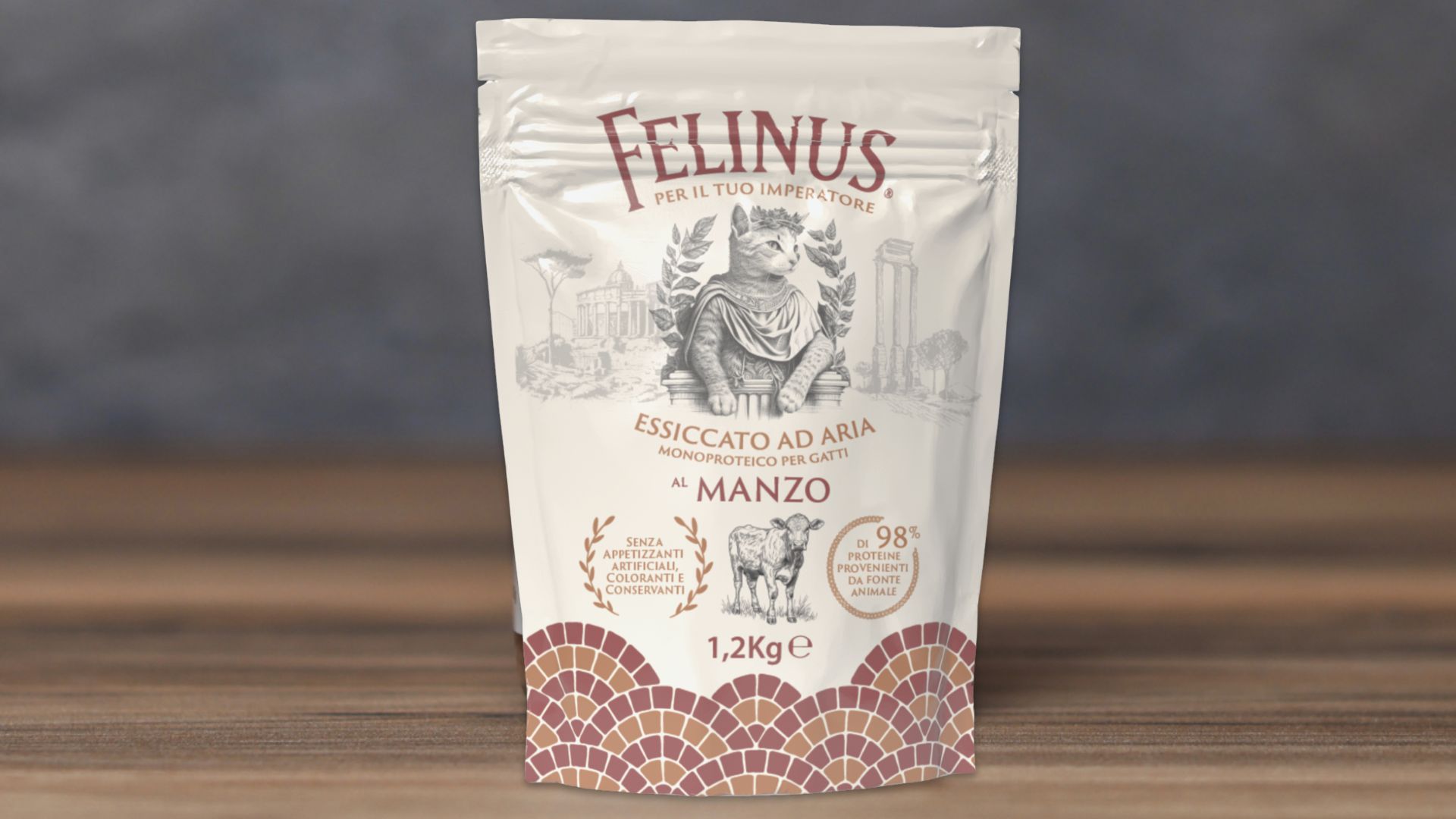
Proud, elegant, selective… the cat is the true ruler of the home.
And like any emperor worthy of the name, they deserve the very best in their bowl—for their wellbeing.
But what food should you offer? Kibble? Wet food?
Maybe there’s something better.
In countries like Germany, the UK, and the United States, more and more people are discovering a new way to feed their cats. It’s a natural, nourishing, and surprisingly convenient alternative that’s transforming the idea of cat food: air-dried food.
Air-dried food is a complete diet that resembles kibble in shape and everyday convenience, but stands out for its ingredients, raw material quality, and processing.
The meat is not cooked at extremely high temperatures, as happens with traditional kibble and wet food. Instead, the ingredients are exposed to a controlled flow of warm air that slowly removes moisture without compromising essential vitamins, antioxidants, and enzymes.
The result? A complete food, free from artificial preservatives, that gives cats the benefits of a raw or home-prepared diet—along with the convenience of ready-to-serve food.
1) The three pillars of Felinus air-dried food
- Gentle low-temperature processing: Felinus air-dried food is made using a low-temperature process that removes moisture without “stressing” the ingredients. This keeps the meat and nutrients intact, giving your cat a natural food packed with benefits—just like in nature.
- Meat quantity: The amount of meat is very high (equal to 80%), clearly more than any kibble on the market. Let’s not forget that cats are obligate carnivores—by nature they don’t eat legumes or grains.
- Meat quality: Air-dried food isn’t made with meat meals, which almost always contain slaughter by-products.
2) Differences between kibble and Felinus air-dried food
Production process
Kibble is produced in high-pressure, high-temperature plants: meal, water, and additives are mixed and cooked above 100°C into compact pellets. Felinus air-dried food, on the other hand, is exposed to a controlled airflow that does not exceed 75 degrees.
The result? Authentic flavor, far from the thermal shock caused by kibble’s double cooking process.
Composition
In kibble, meat must be reduced to meal, and that meal is mixed with legumes and grains.
Air-dried food, instead, is made mostly from fresh meat (80%) and contains no sugars, legumes, grains, hydrolyzed proteins, or slaughter by-products.
Palatants and additives
To get cats to “bite” a compact, rather bland pellet, kibble producers often rely on glutamates, hydrogenated animal fats, and artificial flavors. Air-dried food doesn’t need them: the bold taste of real meat is already more than enough to win over a feline palate.
Nutrient retention
While kibble loses vitamins and omega-3s under scorching ovens, air-drying naturally preserves much of these micronutrients. However, a small support is needed to reach a 100% complete profile: the mix is enriched with natural extracts of vitamins, minerals, and functional foods. The result? A food that stays true to “almost raw,” while also ensuring all key nutrients through targeted supplementation.
Texture and weight
Kibble pellets are hard, compact, and relatively heavy. Air-dried food is light, porous, and crumbly, full of internal air pockets.
Ingredient list
Kibble labels list a long series of ingredients, including legumes, grains, by-products, additives, preservatives, and palatants.
Felinus air-dried food has a label with fewer ingredients due to less need for supplementation and the absence of fillers
Digestibility
Air-drying makes proteins easier to absorb, reducing digestive stress. It’s a particularly suitable choice for cats with sensitivities or delicate stomachs.
Higher palatability
Have you ever seen a cat “sniff” a piece of kibble from far away? Almost always, it’s due to a mix of artificial aromas designed to entice them. Air-dried food, instead, tempts your cat with the natural aroma of dehydrated meat—enough to entice even the pickiest palates.
Environmental impact
Extrusion drives energy consumption to industrial levels due to high pressures and scorching ovens. Air-drying, with lower temperatures and a less invasive process, is decidedly greener and requires less energy-intensive equipment.
Allergen profile
If your cat is sensitive to grains and legumes, kibble may trigger skin or gastrointestinal reactions. Air-dried food is the best choice for a low-allergen diet.
Indicative cost
The price of a bag of kibble may look appealing, but consider the cost–benefit ratio.
A healthy diet helps you save on vet bills—and it’s no coincidence that more and more cats suffer from health problems.
Air-dried food costs a bit more because it contains a lot of meat.
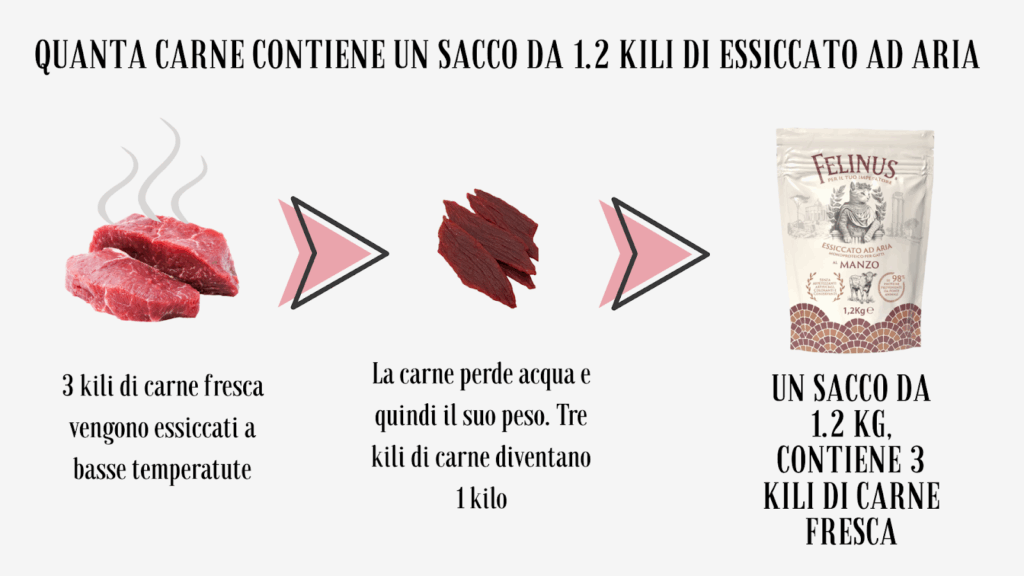
In a 1.2 kg bag of air-dried food, you’ll find 1 kg of dried meat, obtained by removing only the water from fresh meat.
Keep in mind that to get 1 kg of dried meat, about 3 kg of fresh meat are needed. So in a bag of air-dried food there are three kilos of fresh meat.
Practical advantage
Air-dried food combines the easy storage of dry food with the benefits of “almost raw”: an ideal compromise for those looking for health and convenience.
3) Felinus air-dried food: the transparent label
Can we tell from the label whether it’s a quality food or not?
Let’s take the label of Felinus beef air-dried food as an example:
Composition: Beef 80% (meat, heart, liver, tripe, kidneys), potato starch, beef fat, minerals, powdered cellulose, linseed oil, cranberry, raspberries, psyllium seeds, chicory inulin (probiotic), crude lecithin, yeast products (fractionated yeast products: Saccharomyces cerevisiae AQP 12260 and 12988, Cyberlindnera jadinii AQP 12549), dehydrated thyme.
Analytical constituents: Crude protein: 40%, crude fats: 18%, crude fiber: 3%, crude ash: 7%, calcium: 1.2%, phosphorus: 0.8%.
First of all, don’t focus on taurine supplementation or calcium–phosphorus ratios.
Even in the worst products, these values are easily “adjusted” with a few additives or synthetic powders.
The first thing to read on a label is the protein data because, as you know, cats are obligate carnivores.
And looking at the protein data on this label, one ingredient is missing—an ingredient you almost always find in kibble.
Do you know which one?
Legumes.
As research shows, legumes are not healthy for cats.
One study showed that legumes alter bile (1).
Another study conducted on cats with heart conditions found that cats fed a high-legume diet had a much lower life expectancy (2).
But why are peas, lentils, or chickpeas added to kibble?
There are two reasons:
- Legumes are cheap, so they help keep kibble prices low;
- Legumes raise crude protein values and contain no crude ash.
This way, companies can use low-quality meat and make it look nutritious, exploiting the “boosting” effect of legumes.
4) Felinus air-dried food could help prevent disease
Have you noticed that more and more cats suffer from health issues? One of the main causes is an inadequate diet.
Let’s debunk a myth: it’s not true that too much protein is bad for cats. This idea is often promoted by kibble manufacturers, but for an obligate carnivore like the cat, a diet rich in animal protein is not only natural… it’s vital.
A study from the University of Cambridge (3) showed that a carbohydrate-rich diet, typical of kibble, alters cats’ intestinal microflora after just 5 weeks.
The gut microbiota of cats is closely linked to multiple pathological conditions, including chronic inflammatory bowel diseases, metabolic disorders, autoimmunity, and aging. Its balance is essential for health.
That explains why many cats experience episodes of vomiting, allergies, intolerances, redness, stools that are too soft or too hard, and bad breath.
High-quality food brings clear benefits for cats.
Here are the benefits of air-dried food:
- Reduced shedding;
- A shinier coat;
- Improved stools
- Improved breath
- Better weight management
- More vitality
- Fewer vomiting episodes
- Lower risk of intolerances and allergies
Reduced shedding and a shinier coat
Thanks to essential fatty acids and vitamin A naturally present in meat—which are preserved with low-temperature processing—your cat’s coat stays glossy and shedding is noticeably reduced.
Improved stools
Stools are an important indicator of cats’ health status.
Meat quality and the absence of fillers such as legumes do not disrupt the gut microbiota and support optimal nutrient absorption.
The result? Firm stools, less odor.
Improved breath
The absence of excess carbohydrates and the quality of the proteins reduce bacterial fermentation in the mouth and intestines, helping keep breath fresher.
Better weight management and more vitality
A high protein intake from animal sources reduces food drive and prolongs the feeling of fullness
With air-dried food, your cat gets only nutrients that are truly useful to their body, avoiding unnecessary calories from legumes and grains.
This means they feel satisfied sooner, preserve muscle mass, and naturally maintain a balanced weight—without forced restriction.
Studies on overweight cats show that high-protein diets enable effective weight loss without loss of lean mass and with reduced hunger over the long term.
Reduced vomiting episodes
High digestibility reduces the risk of gastrointestinal irritation and regurgitation.
Lower risk of intolerances and allergies
The purity of the ingredients, the absence of fillers, and the natural drying process make proteins easier to absorb. It’s a particularly suitable choice for cats with sensitivities or delicate stomachs.
5) Why choose Felinus air-dried food?
That simple daily gesture—pouring kibble into the bowl while your cat watches you trustingly—may seem harmless, but it has a profound impact on their wellbeing.
Choosing a food that’s closer to your cat’s nature is therefore an act of love, because it will help them live healthier and longer… with you.
You’re one click away from making the choice that can improve your cat’s health and happiness.